
Sounds are social creatures. While there is certainly value in helping students with individual sounds, the fact is that there is a lot more to pronunciation than segmentals. Imagine trying to have a conversation without knowing how we blend sounds together, or how sounds are so often reduced […]
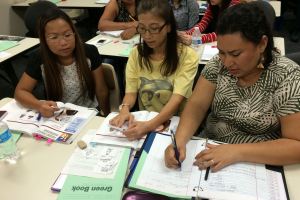
Students rely on models to help them communicate accurately and effectively. How often do you see a student’s thesis statement modeled after one in the textbook? Words are swapped out, but the pattern of the sentence essentially remains the same. Swapping is a useful learning strategy, and one […]

Making tests that push our students enough but not too far can feel like one of the biggest challenges for teachers. Tests that are too easy may lead to a false assessment of proficiency. Those that are too hard can be discouraging to students, and challenging for teachers to grade. What we want […]

Below is a slideshow of one of the presentations we gave at Baltimore TESOL, “Thinking Outside the Paragraph,” where we outline three key principles that inform our teaching of academic writing at lower levels and helped formulate the pedagogy behind our new writing series, Trio Writing, by Oxford University Press. Beginning […]

On Thursday, October 1, we will be presenting an OUP webinar titled Spiraling Into Control: Meeting the needs of beginning writers. This practice-oriented webinar draws on some of our biggest influences, including Eli Hinkle, Ken Hyland, and Diane Larsen-Freeman, who provide possible answers for one of the biggest questions in second language […]
 English Endeavors