The Performance
(Note: This is part 2 of 2. It briefly reviews the previous post and details the outcome of a process drama reading project.)
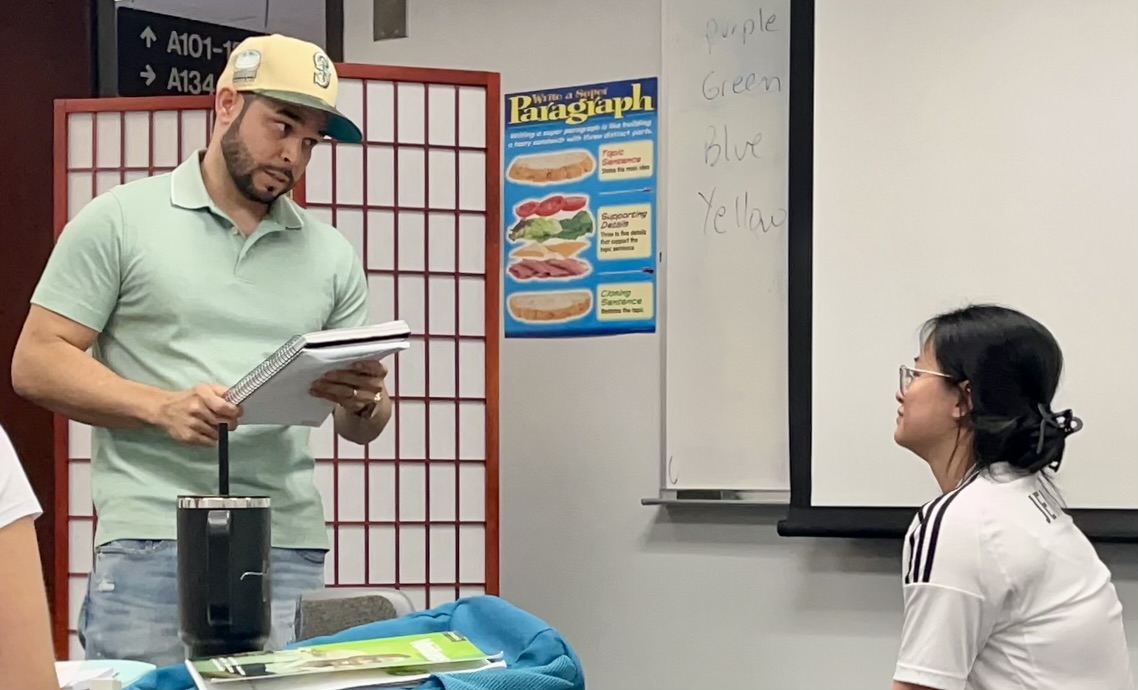
Two students, in role, stand in front of a seated Dr. Lister, also in role. One is berating the nineteenth-century Scottish surgeon for trying to promote his ridiculous theory that germs are little animals swimming around in our bodies.
“You say they are causing infection and killing patients!” she says. “That’s ridiculous!”
Her fellow “medical student” crosses her arms and takes a different tactic. “Anyway, if you are right, why don’t we hear about antiseptic methods from our other professors? How could they all be wrong?”
Dr. Lister looks up at them. Then he stands to face his interrogators.
“I did experiments,” he says grandly. “I took notes on two types of surgery—one with carbolic acid and one without.” He pauses. “And do you want to know what I learned?”
He pauses again.
“What?” the students say in unison.
“More people had infections when I did not use carbolic acid. More people died when I did not use carbolic acid. The experiment showed that antiseptic methods work. Carbolic acid kills germs, and it saves lives!”
The younger medical students look at him skeptically, but he continues. “It is up to you. You are medical students now, but you have your future careers ahead of you. You will operate on many patients. Will they live—or will they die of infection? The choice is yours.”
Background
This is a generous description of the performance that took place in a multi-level (beginner to low intermediate) combined class of English learners at a community college. In the interests of full disclosure, the dialogue was not this grammatical, and the pronunciation of surgery and carbolic acid was not always clear—though ridiculous was beautifully stressed, thanks to practice. I also can’t honestly say the delivery had all the dramatic flourishes one might wish for, which would have required more rehearsal.
However, I am convinced that this scene captures how the students felt as they were performing. They were bringing a historical text to life, and the energy in the room was palpable. It was clear that they had understood the stories and events in their background reading, and that they were able to work together, in English, to dramatize a complicated series of events.
While drama was the device, the larger goal was to deepen students’ engagement with reading—and, the project was successful. The reading texts were far above the level of the coursebook material in both vocabulary and skills. The proof of students’ understanding was evident in their characters’ points of view, in the decisions they made while working through dramatic conflicts, and in their reflections afterward.
The Process
Past experience has convinced me that drama activities boost language learners’ confidence across a range of skills, from pronunciation and prosody to pragmatics. The language demands of negotiating plot development and rehearsals, the useful conversational expressions embedded in dialogue, the themes that invite both personal connection and academic exploration, and the excitement of constructing a shared fictional reality have all led me to wonder why there is not more demand for drama in the classroom.
At the same time, I acknowledge that drama may feel intimidating for teachers and students without a theater background. Drama projects can disrupt traditional classroom dynamics. Students must become comfortable seeing and being seen in new ways. They must feel safe being nervous, silly—or dramatic. They must also be comprehensible, which means a robust and effective pronunciation program needs to accompany any ambition to stage a story. Finally, dramatic endeavors do not always turn out as expected. I had planned to implement process drama whereby students move through a series of events as characters in a shared dramatic world without script or audience. It turned out, the students wanted both.
With all this in mind, I tried to mitigate risks and set students up for success. Because Colin and I were combining our classes for this module, we began with community-building activities. Our theater games and improvisation activities doubled as pronunciation practice. For example, students introduced themselves by saying their names in a scared voice, an enthusiastic voice, and an angry voice. We team-drilled expressions that would later be integrated into scenes, such as ridiculous, a dangerous disease, and houses of death (a nineteenth-century reference to hospitals). Students also mimed passing an imaginary ball that was, by turns, heavy, sticky, cute, stolen, or fragile—warming them up physically and priming them to construct a shared fictional world.
Alongside these games, students read historical fiction and short informational texts at the A2 level, all directly or indirectly related to Joseph Lister’s long struggle to introduce antiseptic methods to hospitals. In one text, he successfully operates on Queen Victoria. In another, he faces fierce opposition from the American surgeon Samuel Gross, who publicly rejects germ theory at the Philadelphia Centennial Exhibition of 1876. In a third, Lister’s wife is accosted on the street by a surgeon who warns her that her husband is making trouble and could lose his position. Students also read about the invention of the microscope and Louis Pasteur’s discovery of bacteria.
Most texts were about half a page long, and many included illustrations so students could easily digest them, share ideas, annotate, and otherwise work with the content in manageable chunks. They were selected, written, or adapted to give students a strong sense of character and motivation while weaving a broader picture of prevailing attitudes in medical science.
Students worked in groups three or four. Each group received a stack of texts to read and discuss, with the suggestion that they divide up the readings and share. They were then given three tasks:
- Create profiles for six to eight characters, detailing each character’s relationship to Lister, their beliefs, and their choices.
- Create a fifty-year timeline for germ theory, beginning around 1860.
- Choose roles and prepare a dramatic interpretation of one conflict from the timeline.
The groups then worked with their papers, highlighters, and pens for about forty-five minutes. We ran out of time and agreed to do the performances the following week. To our surprise, more than half the students took readings home. They were asked not to write scripts, but several did anyway. When we met again, this time with two teachers, some arrived with printed copies. This meant less “process drama” and more “product performance,” but their initiative was admirable, and after doing some pronunciation warm ups, Colin and I gave them time to organize themselves and rehearse.
Finally, they were ready to perform. Each group had chosen a different historical moment, so students were eager to watch one another. The presence of an audience meant the project shifted even closer to a traditional theater performance than pure process drama, but elements of spontaneity and improvisation remained. Importantly, small-group performances allowed us to see individual students’ understanding of the material directly.
At level one, simply communicating in English for five minutes is a huge challenge, but to our delight, their performances were largely comprehensible. As noted earlier, not all speakers were fully clear, but their grasp of historical detail was strong, and they creatively shaped their scenes. We could follow the story and recognize the motivations of characters.
“I don’t believe in germ theory,” said one medical student to another who responded, “You have to be more open-minded.”
And,
“I don’t want to disagree with you, Your Majesty, but isn’t traditional surgery better?” said a friend of Queen Victoria, who replied, “Staying alive is better. Look at me. I can eat this delicious cake.”
In the talkback afterward, we returned to medical care and scientific progress. Colin asked what students had learned, and several mentioned the importance of the microscope. They could understand why people once found the idea of “little animals swimming in our blood” ridiculous, and why Pasteur’s work took time to be accepted. Others connected the historical resistance to germ theory with contemporary skepticism about vaccines. Still others noted the importance of voice in communication. “You have to feel what you say, or people do not understand,”
These adult students were already familiar with germ theory, of course, but it was exciting to see them work through the module in English. For a few hours, we turned the class into a theater and invited students to use source material and their creativity to make art. It was a little scary to relinquish control over the product, and the preparation was extensive—but we were satisfied that the drama project inspired a deeper engagement with the content. They also developed a deeper engagement with one another. The experience was a reminder that creating a shared imaginary world isn’t just for children. Drama is a powerful learning tool for all of us if we take a leap of faith and trust the process. I’m not the only one who thinks so. In fact, Colin is teaching a theater-based ESOL course this summer, and several students promised to register on the spot.
References
Bolton, G. (1984). Drama as education: An argument for placing drama at the centre of the curriculum. Longman.
Fitzharris, L. (2017). The butchering art: Joseph Lister’s quest to transform the grisly world of Victorian medicine. Farrar, Straus and Giroux.
Heathcote, D., & Bolton, G. (1995). Drama for learning: Dorothy Heathcote’s mantle of the expert approach to education. Heinemann.
Immordino-Yang, M. H. (2015). Emotions, learning, and the brain: Exploring the educational implications of affective neuroscience. W. W. Norton & Company.
O’Neill, C. (1995). Drama worlds: A framework for process drama. Heinemann.
Savage, A. (2019). The drama book: Lesson plans, activities, and scripts for English-language learners. Alphabet Publishing.
Categories: ELT
 English Endeavors